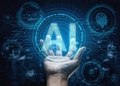
Technology has always evolved to make human interaction easier. From keyboards and computer mice to touchscreens and voice commands, every advancement has aimed to reduce effort and create a more natural experience. Today, a new wave of innovation is making digital interaction even more intuitive. Instead of touching a screen or pressing a button, people can simply move their hands, wave, point, or perform specific motions to control devices. This is where gesture recognition technology is making a significant impact.
The idea of controlling machines through body movements once seemed futuristic. Now it is becoming part of everyday life. Smartphones use gesture controls, smart televisions respond to hand movements, vehicles include gesture-based commands, and healthcare professionals can navigate medical images without touching a screen. As artificial intelligence and sensor technology continue to improve, gesture recognition is becoming faster, smarter, and more accurate.
What makes this technology so fascinating is that it brings digital systems closer to the way humans naturally communicate. People use gestures every day without thinking about them. A wave can mean hello, a point can indicate direction, and a thumbs-up can signal approval. Gesture recognition systems are designed to understand these movements and translate them into actions that machines can perform.
What Is Gesture Recognition Technology?
Gesture recognition technology is a system that identifies and interprets human movements as commands for a digital device or software application. These movements can involve hands, fingers, arms, facial expressions, eye movements, or even full-body actions.
Rather than relying on physical contact, the technology observes motion through cameras, sensors, or wearable devices. Once a gesture is detected, software analyzes the movement and determines the intended action.
For example, a user may:
• Swipe a hand in the air to move to the next presentation slide
• Pinch fingers together to zoom out of an image
• Wave a hand to answer a call
• Point toward a smart device to activate a command
The goal is to create a smoother and more natural connection between humans and machines.
Why Gesture-Based Interaction Feels Natural
Humans communicated through gestures long before written language existed. Body movements have always played an important role in expressing thoughts, emotions, and intentions.
When technology understands gestures, users do not need to learn complicated commands or navigate multiple menus. Instead, they can interact with devices in a way that feels familiar.
Imagine walking into a room and turning on the lights with a simple hand movement. Or imagine a surgeon reviewing medical scans without touching any equipment during a procedure. These interactions feel natural because they align with the way people already behave in daily life.
This natural communication style is one reason why gesture recognition technology is gaining attention across many industries.
How Gesture Recognition Technology Works
At first glance, gesture recognition may seem simple. A person moves their hand, and a device responds. Behind the scenes, however, several advanced technologies work together to make this possible.
Capturing Motion
The process begins with gathering information about movement.
Different systems use different tools, including:
• Standard cameras
• Depth-sensing cameras
• Infrared sensors
• Motion detectors
• Wearable devices
These technologies collect visual and spatial information about the user’s movements.
Identifying the Gesture
After capturing movement data, software analyzes the information to identify patterns.
The system looks for details such as:
• Hand position
• Finger arrangement
• Movement direction
• Motion speed
• Body posture
The software then compares the detected movement with stored gesture patterns.
Performing the Action
Once the gesture is recognized, the system triggers the corresponding command.
For example:
A swipe gesture may move to the next page.
A raised hand may pause a video.
A circular motion may increase volume.
All of this typically happens within a fraction of a second, creating a smooth user experience.
The Journey from Science Fiction to Everyday Reality
For many years, gesture-controlled systems appeared mainly in science fiction films. Characters could manipulate digital displays with hand movements and control advanced machines without touching anything.
While those scenes once seemed impossible, advances in computing power, sensor technology, and artificial intelligence have brought many of those concepts into reality.
Early gesture systems struggled with accuracy. They often misinterpreted movements and required highly controlled environments. Modern systems, however, can recognize complex gestures even in busy surroundings.
The technology has progressed from research laboratories into homes, offices, hospitals, vehicles, and entertainment platforms.
Today, many people use gesture-based features without even realizing it.
Everyday Examples of Gesture Recognition Technology
The influence of gesture recognition technology can already be seen in daily life.
Smartphones use gesture navigation to replace physical buttons. Users can swipe, tap, and perform specific motions to access features.
Smart televisions allow viewers to control content through hand movements.
Laptops increasingly support touch-free controls using built-in cameras.
Video conferencing systems can detect gestures to mute microphones or answer calls.
Even fitness applications use body tracking to monitor exercise performance and provide feedback.
These examples demonstrate how gesture recognition is quietly becoming a normal part of modern technology.
Healthcare Is Experiencing Major Benefits
One of the most valuable applications of gesture recognition is in healthcare.
Medical professionals often work in environments where maintaining cleanliness is critical. Touching keyboards and screens during procedures can be inconvenient and may introduce contamination risks.
Gesture-based systems allow doctors to interact with medical information while keeping their hands sterile.
For example, a surgeon can:
• Rotate medical images
• Zoom into scans
• Review patient data
• Access information during procedures
Physical rehabilitation programs also benefit from motion tracking technology.
Therapists can monitor patient movements in real time and measure progress with greater accuracy. Patients can perform exercises while the system records detailed movement data.
This creates a more personalized and measurable recovery process.
The Growing Role of Gesture Control in Vehicles
Modern vehicles contain more digital features than ever before.
Drivers interact with navigation systems, entertainment controls, communication tools, and climate settings while traveling. Traditional controls can sometimes require drivers to take their eyes off the road.
Gesture recognition offers an alternative.
Simple hand movements can perform actions such as:
• Adjusting volume
• Accepting phone calls
• Switching menu options
• Managing navigation functions
These capabilities help reduce distractions and create a more convenient driving experience.
As vehicles become increasingly connected and autonomous, gesture-based interfaces are expected to become even more important.
Entertainment and Gaming Without Controllers
Gaming has been one of the most visible examples of gesture recognition technology.
Motion-based gaming systems introduced millions of people to controller-free interaction. Instead of pressing buttons, players could use physical movement to control gameplay.
Modern gaming experiences go much further.
Advanced systems can detect:
• Hand movements
• Full-body motion
• Facial expressions
• Head orientation
Virtual reality and augmented reality platforms rely heavily on natural interaction methods. In these environments, gestures allow users to manipulate digital objects as if they were physically present.
This level of immersion creates a more engaging and realistic experience.
Smart Homes Are Becoming More Responsive
The idea of a smart home is no longer limited to voice commands and mobile applications.
Gesture recognition is creating new possibilities for home automation.
A homeowner may be able to:
• Turn lights on or off with a wave
• Open curtains through a hand motion
• Control music playback
• Adjust room temperature
• Manage connected devices
These interactions can be especially useful when hands are occupied or when voice commands are not practical.
As smart homes continue to evolve, gesture-based controls may become a standard feature.
Making Technology More Accessible
One of the most meaningful advantages of gesture recognition technology is its ability to improve accessibility.
Traditional input devices are not always suitable for everyone. Some individuals may have difficulty using keyboards, touchscreens, or other physical controls.
Gesture-based systems provide alternative methods of interaction.
People with mobility limitations may use customized gestures to operate devices.
Users with speech impairments may communicate through motion-based interfaces.
Assistive technologies can be tailored to meet specific needs, helping individuals maintain independence and access digital resources more easily.
This ability to create inclusive experiences is one of the technology’s greatest strengths.
Business Applications Are Expanding Quickly
Businesses are exploring gesture recognition for a variety of practical reasons.
Interactive displays in retail stores allow customers to browse products without touching screens.
Conference rooms use gesture controls for presentations and collaboration.
Industrial facilities employ motion recognition systems to improve efficiency and worker safety.
Some workplaces even use gesture-based interfaces to reduce physical contact with shared equipment.
The technology can improve workflow, increase engagement, and create memorable customer experiences.
As organizations continue seeking innovative ways to interact with users, gesture recognition is becoming an attractive solution.
Challenges That Still Need Attention
Although the technology has made impressive progress, it is not without challenges.
Lighting conditions can affect camera performance. Bright sunlight, shadows, or poor illumination may reduce accuracy.
People also move differently. A gesture that is clear for one individual may look slightly different when performed by another person.
Privacy concerns remain important as well.
Because many systems rely on cameras and sensors, users often want reassurance that their information is being handled responsibly.
Developers must continue improving accuracy, reliability, and data protection to ensure long-term trust and adoption.
The Future of Gesture Recognition Technology
The future of gesture recognition technology looks incredibly promising.
Advances in artificial intelligence are making systems more capable of understanding context and intent. Instead of recognizing only isolated movements, future systems may understand what a person is trying to accomplish.
For example, a smart system might recognize that someone is cooking and automatically adjust controls to suit that activity.
Miniaturized sensors are becoming more affordable and more powerful. This means gesture recognition can be integrated into a wider range of products.
Emerging developments include:
• Air-based interfaces with invisible controls
• More accurate hand and finger tracking
• Enhanced virtual reality interaction
• Emotion-aware systems
• Advanced accessibility tools
As these innovations mature, gesture recognition will become more deeply integrated into everyday experiences.
A World Moving Toward Touch-Free Interaction
The way people interact with technology is changing rapidly. Devices are becoming smarter, more responsive, and more capable of understanding natural human behavior.
Instead of forcing users to adapt to machines, modern systems are learning to adapt to people.
That shift is exactly why gesture recognition technology is gaining momentum. It allows interaction to feel effortless, intuitive, and human-centered.
From healthcare and education to gaming, retail, transportation, and smart homes, the technology is opening new possibilities for communication between people and machines.
Conclusion
Gesture recognition technology represents a major step forward in the evolution of human-computer interaction. By allowing devices to understand movements, gestures, and physical actions, it creates a more natural way to control digital systems.
Its applications continue to expand across numerous industries, improving convenience, accessibility, efficiency, and user experience. Whether helping surgeons navigate medical images, enabling drivers to control vehicle functions, enhancing immersive gaming experiences, or making smart homes more responsive, the impact of gesture recognition is becoming increasingly visible.
As artificial intelligence, sensors, and computer vision technologies continue to advance, gesture-based interaction will become more accurate, more affordable, and more widely available. The result will be a future where interacting with technology feels less like operating a machine and more like communicating naturally with the world around us.